• Be Bold & Courageous

    A Midlife Reset for Men Who Feel Stuck

    There comes a point in a man’s life when staying small no longer feels like humility—it feels like quiet suffering.

    I know this because I lived it.

    For years, I believed that being humble meant keeping my goals modest, my voice quiet, and my ambitions contained. I told myself that this was the “right” way to live. I served others faithfully. I volunteered. I worked hard. I carried responsibility without complaint.

    Yet beneath all of that effort, something was missing.

    I wasn’t unhappy because I lacked discipline or work ethic. I was unhappy because I was living a life that wasn’t truly mine.

    When Humility Turns Into Self-Erasure

    There is a difference between humility and self-erasure. Humility keeps us grounded. Self-erasure keeps us stuck.

    For a long time, my life revolved around meeting expectations that weren’t my own. My workload was heavy, but my sense of purpose was light. The goals I set were safe, not meaningful. And while I was helping everyone else move forward, I was quietly standing still.

    That kind of living takes a toll—mentally, emotionally, and spiritually.

    The Strength You Don’t See Right Away

    Here’s the part many men overlook: years of showing up still count.

    Volunteering taught me discipline.

    Service built my work ethic.

    Adapting to different people and constant change sharpened my resilience.

    I learned how to work when motivation was low.

    I learned how to stay consistent.

    I learned how to adjust without breaking.

    That strength didn’t disappear—it was waiting.

    Choosing Boldness in Midlife

    Being bold doesn’t mean being reckless.

    Being courageous doesn’t mean having no fear.

    It means deciding that your life deserves intention.

    Now, boldness for me looks like this:

    • Claiming goals that actually matter to me
    • Allowing myself to experiment without perfection
    • Trusting that persistence beats talent over time
    • Accepting that growth requires discomfort

    I’ve always wanted to be a creative writer, and content creator. And now, with time, experience, and patience on my side, that goal isn’t unrealistic—it’s reasonable.

    Persistence + Experimentation = Progress

    Men often quit too early—not because they’re weak, but because they expect certainty before action.

    The truth is: You don’t need clarity to start.

    You need courage to try.

    Persistence keeps you going.

    Experimentation keeps you learning.

    Boldness keeps you honest.

    Becoming a New Man—Without Shame

    I don’t regret my past. I honour it.

    But I no longer shrink for anyone else’s expectations—nor my own outdated beliefs.

    This isn’t rebellion.

    It’s evolution.

    If you’re a man reading this and you feel stuck, tired, or quietly restless, hear this clearly:

    You are not late.

    You are not broken.

    You are allowed to grow again.

    Be bold.

    Be courageous.

    Stay persistent.

    And if today is heavy—survive today.

    That’s enough.

    Keep going, brother.

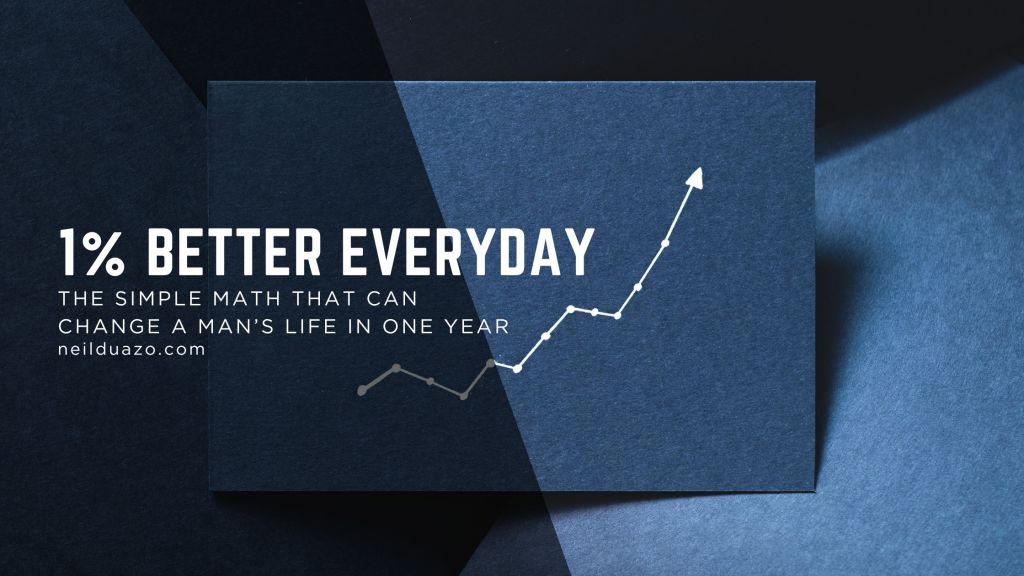
  • 1% Better Every Day

    The Simple Math That Can Change a Man’s Life in One Year

    I’m a 52-year-old man who has spent years working through depression, anxiety, and chronic stress. I didn’t wake up one morning “fixed.” I didn’t suddenly become disciplined, confident, or calm either.

    What actually helped me move forward was something surprisingly simple:

    Getting 1% better each day.

    This idea was powerfully articulated by James Clear, and it deserves real respect. Not because it sounds motivational—but because it’s mathematically true and psychologically sustainable.

    If you’re struggling right now, this isn’t about fixing your whole life.
    It’s about staying long enough to let progress compound.

    The 1% Equation (And Why It Matters)

    The equation looks like this:

    1.01ⁿ

    That’s a 1% improvement, compounded daily.

    To make this real, I created a one-year graph that visually shows what happens when you stay consistent for 365 days.

    Here’s what the math tells us:

    • After 30 days:
      1.01³⁰ ≈ 1.3535% better
    • After 6 months (180 days):
      *1.01¹⁸⁰ ≈ 6× better
    • After 1 year (365 days):
      *1.01³⁶⁵ ≈ 37× better

    That curve explains why progress feels invisible at first—and why quitting early is so tempting.

    Why Most Men Quit Too Soon

    Look at the graph again.

    The first few months feel flat. This is where men say:

    • “Nothing’s working”
    • “I’m the same as before”
    • “What’s the point?”

    But the curve does change—only if you stay.

    As James Clear teaches, success is rarely about intensity. It’s about consistency and identity:

    “Every action you take is a vote for the type of person you wish to become.”

    Daily Habits Beat Motivation Every Time

    Motivation is unreliable—especially when you’re dealing with anxiety or low mood.

    Habits work because they:

    • Remove emotional negotiation
    • Build self-trust
    • Keep progress alive on hard days

    A 1% improvement might be:

    • A 10-minute walk
    • Writing one honest journal page
    • Drinking water instead of another coffee or drink
    • Turning your phone off earlier
    • Speaking to yourself with less cruelty

    Small actions. Big future.

    Discipline Is Quiet Self-Respect

    Discipline isn’t punishment. It’s proof you care about future you.

    The Stoics understood this well:

    “It is not that we have a short time to live, but that we waste much of it.” - Seneca

    You don’t need to dominate the day.
    You need to keep promises to yourself.

    When Today Feels Heavy

    Some days, your 1% will be:

    • Getting out of bed
    • Not numbing yourself
    • Asking for help
    • Simply staying

    That still counts.

    The graph doesn’t care how you improve—only that you don’t stop.

    Final Words: Stay for the Curve

    If you’re struggling right now, don’t aim for a perfect life.

    Aim for tomorrow.

    Aim for 1%.

    And trust that one year of staying will quietly build a man you’re proud of.

    Keep going, brother.

  • Someone Else’s Opinion of You Does Not Have to Become Your Reality

    A grounded reminder for men rebuilding their mental health, one decision at a time

    We all grow up inside someone else’s expectations.

    Where we grew up—and who we grew up with—often shaped ideas about who we were “supposed” to become. Maybe you were told you should be a lawyer, a doctor, or something that looked respectable from the outside. Maybe you were told—directly or indirectly—that you wouldn’t amount to much because school was hard, memorization didn’t come naturally, or your interests didn’t fit the mould.

    Some men were judged for their skin tone, their neighbourhood, their accent, or their country of origin. Others were judged inside their own homes—by silence, criticism, or disappointment that was never clearly explained.

    Over time, those opinions can quietly turn into beliefs.
    And beliefs, if left unchallenged, can feel like facts.

    But here’s the truth many of us discover later in life:

    Someone else’s opinion of you does not have to become your reality.

    What “Making It” Really Means

    As I’ve moved through adulthood—and worked through my own depression, anxiety, and stress—I’ve noticed something important.

    Many people who were told they’d “never make it”… did.

    Not always in the flashy ways society celebrates.

    “Making it” doesn’t only mean becoming a millionaire, CEO, or inventor.

    It can mean:

    • A man who lost his legs and learned to walk again using prosthetics
    • Someone with severe PTSD who slowly learned to step back into the world
    • A person who lived as an addict for years, got sober, and now helps others do the same

    These stories don’t always make headlines—but they are victories nonetheless.

    The Turning Point: Refusing to Stay a Victim

    What I consistently see in people who move forward isn’t luck or privilege—it’s a decision.

    At some point, they stop seeing themselves only as victims of their circumstances.

    That doesn’t mean denying pain.
    It means refusing to let pain make all the decisions.

    They focus on what they want, not just what hurt them.
    They create systems—sometimes intentionally, sometimes imperfectly—to move toward that life.
    They develop discipline, not because they feel motivated, but because they decide to keep going anyway.

    They stumble. They fail. They doubt themselves.

    And they still move forward.

    The Quiet Strength Around Us

    The belief of “I am going to make it”—however quietly spoken—is often stronger than years of criticism.

    We see these people everywhere, often hidden in plain sight:

    • The dad who is emotionally present and available for his family
    • The woman who simply wants to build cars and live honestly
    • The man who chooses sobriety, stability, and responsibility after chaos
    • People living in their truth instead of shrinking to fit expectations

    Not everyone is free to live openly—but many are slowly reclaiming their sovereignty anyway.

    A Question Worth Asking

    So who are YOU, really?

    Not according to your upbringing.
    Not according to your community.
    Not according to your past mistakes.

    But according to YOUR SOUL.

    Do you want to be:

    • An entrepreneur who solves real problems for people?
    • A better husband, father, or partner?
    • Sober, grounded, and steadily employed?

    All of those count. None are small goals.

    And this matters too:

    This message applies even if the harshest opinions came from yourself.

    You Don’t Need a “New Year” to Begin

    You don’t need January 1st to start over.
    You don’t need permission.
    You don’t need to have it all figured out.

    Start now.

    May 2026—or any future version of your life—be shaped by what you choose today.

    Celebrate the small wins.
    Expect setbacks.
    Keep going anyway.

    You’re allowed to outgrow old narratives.
    You’re allowed to become someone new.

    And you’re not weak for trying.

  • The Difference Between Who You Are and Who You Want to Be Is What You Do

    Most men have goals.

    A better career.
    Better health.
    More peace of mind.
    Stronger relationships.

    But only a small percentage actually follow through.

    The difference isn’t intelligence, talent, or luck.

    The difference is action—done consistently, especially when it’s uncomfortable.

    Vision Is Easy. Commitment Is Hard.

    Plenty of men can see the life they want.
    They can imagine being calmer, more confident, healthier, and more fulfilled.

    Where things fall apart is when the work gets hard.

    When progress is slow.
    When motivation disappears.
    When old habits start pulling them back.

    Some men keep going anyway.
    Others quit—or never really start.

    That’s not a character flaw. It’s usually a lack of systems and direction, not a lack of desire.

    “What Are You Doing About It?”

    I’ve written before about a simple but uncomfortable question:

    What are you doing about it?

    It applies here too.

    If you’re unhappy with where you are in life, ask yourself:

    • Who do I want to be?
    • And more importantly—what am I doing today to move toward that man?

    Complaining doesn’t change anything.
    Awareness alone doesn’t change anything.

    Action does.

    Change Isn’t Annual—It’s Daily

    One of the biggest mistakes men make is thinking change only happens on New Year’s Day.

    Real change happens:

    • On ordinary Tuesdays
    • During stressful weeks
    • When you don’t feel motivated

    Small, daily changes beat massive overhauls every time.

    Trying to change everything at once usually leads to burnout and quitting.
    Building small, repeatable habits creates momentum—and momentum creates confidence.

    Daily habits turn into systems.
    Systems turn into a sustainable way of living.

    The Man You Want to Become Will Cost You Something

    This part matters.

    Becoming a better man isn’t free.

    It costs comfort.
    It challenges your ego.
    It forces you to look at patterns you’d rather avoid.

    Inner work—sometimes called shadow work—can be uncomfortable.
    But it’s also where growth happens.

    To avoid self-sabotage, you need:

    • Clear systems
    • Boundaries
    • And discipline to follow through

    Discipline isn’t about punishment.
    It’s about showing up even when motivation is gone.

    Discipline Beats Motivation—Every Time

    Motivation comes and goes.

    Discipline stays.

    Discipline is what gets you moving on hard days.
    Discipline is what keeps your habits intact when life gets messy.

    The men who change their lives aren’t always motivated.
    They’re consistent.

    Purpose Gives Discipline Meaning

    When your goals are connected to something bigger—your purpose, your values, your mission—it becomes easier to stay the course.

    You stop asking:
    “Is this worth it?”

    And start saying:
    “This matters to me.”

    Create systems that support your goals.
    Practice discipline daily.
    Stay patient with the timeline.

    If you do that, I genuinely believe you can win at life—on your own terms.

    Final Thought

    You don’t need to become a different person overnight.

    You just need to take one honest step today.

    Because the gap between who you are and who you want to be is closed the same way every time:

    By what you do—consistently.

    Keep going, brother.

  • Start With a Clear Vision: Why Men Need Purpose to Improve Mental Health

    For a long time, I thought working on my depression, anxiety, and stress meant fixing what was “wrong” with me. Breathing exercises. Journaling. Therapy. All helpful. Necessary, even.

    But over the years, I realized something important was missing.

    A clear vision.

    Not a five-year business plan. Not a perfect life. Just a concrete picture of what I was moving toward.

    Everything Starts With a Vision

    Almost everything meaningful we admire starts with a vision.
    Actors see themselves on stage long before anyone knows their name.
    Athletes picture the win before the work becomes brutal.
    Doctors, tradesmen, craftsmen, and builders all start with an idea of what they’re creating.

    And this isn’t limited to big careers or public success.

    Some men simply want to be:

    • A steady, present father
    • A dependable husband
    • Someone who builds things with his hands and takes pride in it
    • A man who feels calmer in his own mind

    Those are visions too—and they matter just as much.

    Why Men Struggle Without Purpose

    Many men don’t fall apart because they’re weak. They struggle because they feel directionless.

    Men are wired to build, fix, improve, and move toward something. We’re generally physical by nature. Even when we’re thinkers, we still need something tangible to work on.

    When there’s no clear focus:

    • Anxiety fills the gap
    • Depression creeps in quietly
    • Stress becomes constant background noise

    Without a vision, energy turns inward—and not in a healthy way.

    Purpose Doesn’t Have to Mean a Business

    This is where a lot of guys get stuck.

    Purpose doesn’t have to mean starting a company or chasing money (or women). It can be:

    • Improving your mental health, one habit at a time
    • Getting stronger physically
    • Deepening your spiritual life
    • Restoring an old car
    • Learning woodworking
    • Becoming a calmer presence for your family

    The key isn’t what the vision is.
    The key is that it’s yours and that you return to it often.

    Focus Is a Daily Practice

    Having a vision isn’t a one-time exercise. It’s something you revisit daily—sometimes hourly.

    On hard days, focusing on your vision might mean:

    • Choosing a walk outside in nature instead of isolating
    • Writing one honest journal entry
    • Lifting something heavy
    • Saying no to distractions that drain you

    Small actions, repeated with intention, rebuild a sense of control and meaning.

    Why This Improves Mental Health

    When you focus on a clear vision:

    • Your mind has direction
    • Your energy has an outlet
    • Your struggles feel temporary, not permanent

    You stop asking, “What’s wrong with me?”
    And start asking, “What’s the next small step forward?”

    That shift alone can change everything.

    Final Thought

    If you’re in a rough season right now, don’t start by trying to fix your entire life.

    Start by asking one simple question:

    “What do I want to be building in this chapter of my life?”

    Then focus on it.
    Not perfectly.
    Just consistently.

    That’s often where healing quietly begins.

    Keep going, brother.

  • The Best Is Yet to Come: A Daily Reminder for Men Working Through Hard Times

    Every morning you wake up is a quiet signal that the story isn’t finished yet — that the best is still ahead of you. I don’t mean that in a cliché, bumper-sticker kind of way. I mean it as someone who has lived through depression, anxiety, stress, and those long stretches where hope feels like a distant rumour. It took me years to understand this, but a simple phrase became a daily anchor in my own life: 

    “The best is yet to come.”

    At first, it felt like something you repeat just to get through the day. But eventually, it shifted into something deeper — a reminder that tough times don’t last forever, and that I have a responsibility to move toward the life I want, even if it’s one small step at a time.

    Why Staying Hopeful Feels Hard — Especially for Men

    It’s strangely easy to stay stuck in doom-and-gloom thinking. When life piles up and you feel worn down, your brain starts convincing you that this is how things will always be.

    But believing things will improve? That’s the difficult part.

    And yet, from my own experience, improvement usually does come — not instantly, not dramatically, but gradually. The key is this: when you’re genuinely putting in the work to get better, your life will shift in a better direction.

    Men often struggle with impatience. We think:

    • “If I’m doing the work, why isn’t the change here yet?”
    • “Why do I still feel like this?”
    • “Shouldn’t life be easier by now?”

    But growth rarely happens on our schedule. It shows up quietly, in small moments we tend to overlook.

    Where the ‘Best’ Actually Shows Up

    Your “best days” don’t always arrive with fireworks or life-changing events. More often, they show up in tiny, ordinary moments:

    • the sudden arc of a rainbow after a storm
    • the taste of a fresh cinnamon roll
    • the warmth of a deep hug from someone you love
    • a morning coffee that actually slows you down
    • a conversation that feels honest and unforced

    These moments don’t seem like much in isolation. But they compound. And when you take time to reflect, you start to realize something:

    Maybe the best isn’t some far-off destination.
    Maybe pieces of it are already here.

    That doesn’t mean you stop working. It means you start paying attention. Noticing the small good things is one of the strongest antidotes to anxiety and hopelessness — and it builds the resilience needed to keep moving forward.

    A Practical Thought to Carry Every Day

    If there’s one phrase to keep close — something you repeat on the days when your mind is heavy or your hope is thin — let it be this:

    “The best is yet to come… and today is part of the journey toward it.”

    It’s both a promise and an invitation. A promise that better days do exist. An invitation to participate in creating them. Your work, your healing, your consistency — they all matter. Even when you don’t feel them working.

    Final Thoughts for Men on the Healing Journey

    If you’re reading this because life feels heavy, I want you to hear this clearly:

    You’re not behind. You’re not broken. You’re becoming.

    And becoming takes time. So hold onto hope. Notice the small good things. Take the next step, even if it’s tiny. And remind yourself each morning that waking up is proof that your story is still moving forward.

    The best is yet to come, brother — sometimes it just arrives one moment at a time.

  • Self-Discipline Is Self-Love: How Men Can Build a Stronger Mind, Body and Spirit

    Self-Discipline Is Self-Love

    When people talk about “self-discipline,” most men imagine something harsh — like forcing yourself to grind harder, wake up earlier, or push through pain. But the truth is much softer:

    Self-discipline is actually self-love in action.

    Think about how you treat someone you truly love. You open doors for them. You make their breakfast. You protect them when you walk outside together. You dress well for them because you care about how they feel beside you.

    Those acts take effort at first, but over time they become instinctive — because love fuels the discipline.

    Now imagine applying that same care toward yourself. That’s where the real work begins: mind, body, and spirit.

    Let’s break this down.

    1. The Mind: Taking Care of Your Inner World

    If you love your Self, you take care of the place where your thoughts and emotions live. For many men — especially those who’ve battled depression, anxiety, and chronic stress — the mind can feel like a noisy, restless place.

    Stress. Overthinking. Worrying about the future. Feeling stuck in past mistakes.

    These things weigh heavily on our mental health. But with a bit of self-discipline, we can create small shifts that make a huge difference.

    3 Simple Ways to Strengthen Your Mental Health

    1. Daily Mindful Check-Ins
      Take 2 minutes each morning to notice how you feel — mentally and physically. Awareness reduces overwhelm because you stop running on autopilot.
    2. Reframe Your Self-Talk
      Notice negative inner dialogue and gently reword it. Instead of “I always screw up,” try “I’m learning and improving.” Small language changes create big emotional shifts.
    3. Set “Worry Boundaries”
      Create a rule: No worrying outside of a dedicated 10-minute window. When worries pop up, tell yourself, “I’ll handle this during my worry time.” Your brain learns not to spiral all day.

    These are simple, doable, and powerful — and they show love to your future self.

    2. The Body: The Foundation That Carries You

    A disciplined body is not about perfection. It’s about honouring the vessel you live in.

    Our ancestors walked, hunted, carried, built. Their bodies were used daily — and our modern physiology hasn’t changed much. Even if we’re not hunting mammoths anymore, our bodies still crave movement, strength, and real food.

    Move Your Body

    You don’t need to be an athlete.
    Walking, light strength training, stretching — all of it helps.

    Eat Whole Foods

    Meat. Vegetables. Fruits. Grains.
    Foods your great-grandparents would recognize.
    Your body is not designed for ultra-processed stuff, and avoiding them is one of the most loving decisions you can make for your long-term health.

    Prioritize Sleep

    Rest is not laziness — it’s maintenance and repair.

    3 Reasons Why Sleep Is Self-Love

    1. Your Brain Resets and Detoxifies
      During deep sleep, your brain literally washes away waste that builds up during the day.
    2. Mood and Stress Regulation Improve
      Sleep helps balance hormones tied to anxiety, irritability, and emotional resilience.
    3. Physical Recovery Happens Overnight
      Muscles repair, joints heal, and your immune system strengthens — essential, especially for men over 40.

    Sleep is not optional. It’s part of the discipline that keeps you going.

    3. The Spirit / Soul: The Quiet Anchor

    You don’t need to be religious to care for your spirit. Every man has an inner world, a deeper sense of meaning — something beyond the day-to-day grind.

    Stillness, prayer, meditation, reflection… these are acts of self-love because they reconnect you to something larger than your worries.

    3 Ways Spiritual Practice Improves Your Life

    1. Creates Mental Space
      Stillness helps you step back from the noise and see your situation more clearly.
    2. Reduces Anxiety by Letting Go
      Whether you call it surrender, grounding, or prayer — releasing control lightens the emotional load.
    3. Strengthens Inner Stability
      When your spirit is calm, stress has less power over you. You react less, and respond more.

    A nourished spirit makes a stronger man.

    Conclusion: Show Love to Yourself So You Can Show Up for Others

    Taking care of your mind, body, and spirit is not selfish – it’s the opposite. When you are balanced — mentally steady, physically strong, spiritually grounded — you become a better husband, father, friend, co-worker, and community member.

    Self-discipline is the daily practice of showing yourself the same care you’d give someone you love. And when you do that consistently, life changes — not overnight, but steadily, quietly, and profoundly.

    Keep going, brother.
    Your future self will thank you for every step you take today.

  • Why Men Should Stop Settling for “Just Fine” — And Start Building a Phenomenal Life

    If you’re a man in your forties, fifties, or beyond, chances are you’ve had seasons where you were just trying to get through the day. I’ve been there. Years spent managing depression, anxiety, stress… and pretending everything was fine because that’s what men are taught to do. We survive, we push through, and we keep the engine running even when the check-engine light has been on for months.

    But at some point, surviving stops being enough.

    And that’s where this idea came from — a reminder I needed for myself first:

    “Don’t settle for anything less than a phenomenal life. You owe it to yourself to be happy, which will also help others be happy.”

    When you’ve lived through long stretches of heaviness, “phenomenal” can feel unrealistic, maybe even selfish. But it isn’t. Happiness isn’t something you stumble into; it’s something you build. Quietly, consistently, sometimes awkwardly. Brick by brick.

    Here are a few things I learned along the way — practical, doable things — that can help any man begin the shift from survival to something better.

    1. Start with small, honest check-ins

    For years, I’d ask myself, “How do I fix everything?”
    Wrong question!  A better question is:

    “What’s one thing I can do today that makes my life 1% better?”

    Not 100%. Not even 10%.
    Just 1%.

    That might be a walk. Drinking water. Journaling. Sitting on the porch for 10 minutes before the world wakes up. When you stack enough 1% improvements together, life changes quietly but unmistakably.

    2. Simplify what drains you

    Men often carry hidden burdens—financial worries, job stress, aging parents, relationships, pressure to be strong for everyone.

    One of the most powerful things I did was make a list of the things that overwhelmed me. Then I tackled them one at a time. Sometimes the solution was practical (like a budget). Sometimes emotional (talking to someone). Sometimes it was acceptance.

    Every drain you fix gives you more energy for the life you want.

    3. Choose habits that build you instead of numb you

    When life feels heavy, we tend to reach for distractions—screens, food, alcohol, mindless noise. It’s not about judgment; it’s human.

    But ask yourself:

    “Does this habit actually help me feel like the man I want to be?”

    Habits that build you are simple:

    • Exercise (even light)
    • Good sleep
    • Real conversations
    • Creative time
    • Being in nature
    • Learning something new

    None of these feel glamorous, but they pull you toward phenomenal.

    4. Don’t do it alone

    This might be the hardest part for men: letting people see us. The moment I started opening up — not with dramatic confessions, just simple truths — my life began to shift.
     A friend. A therapist. A mentor. A men’s group. A brother. Your partner. Anyone who can hold space.

    Happiness grows faster in connection than in isolation.

    5. Aim for meaning, not perfection

    A phenomenal life doesn’t mean a flawless one.
    It means one built on intention, integrity, and small moments of joy that you allow yourself to feel. It means knowing you deserve more than “fine” or “I’m hanging in there.”
    Because when a man is genuinely happy and grounded, everyone around him benefits — his partner, his kids, his coworkers, even his community.

    Your happiness isn’t selfish. It’s leadership.

    Closing Thought

    If you take away only one thing, let it be this:

    Your life doesn’t have to be extraordinary in every way to be phenomenal. 

    It just needs to be yours — chosen, built, and lived with a little more courage each day.

    Keep going, brother. You’re closer than you think.

  • Create the Highest, Grandest Vision for Your Life

    (Without Losing Yourself Along the Way)

    There’s a quote I’ve always liked: “Create the highest, grandest vision possible for your life, because you become what you believe.”

    It’s simple, but it hits hard — especially for men.

    For a lot of us, purpose is what fuels us. It’s what gets us out of bed when things feel heavy. Having something to aim at — whether that’s improving our career, our health, or our relationships — gives life direction. Without that sense of purpose, days can blur together. You start existing instead of living.

    But here’s the thing: that purpose looks different for everyone.

    Social media makes it seem like every man’s goal should be six-pack abs, financial freedom, and a mansion with ocean views. And sure, those things might be great — but they don’t define you. For some men, purpose is as simple as being present for their kids. For others, it’s keeping a peaceful home, taking care of their body, or becoming a bit more patient than they were yesterday.

    That’s the real work.

    For centuries, people have been trying to “keep up with the Joneses.” We look across the street, compare our lives, and wonder why we’re behind. But comparison doesn’t lead to peace. It just adds debt, clutter, and stress — both financial and emotional.

    So what if your “grand vision” wasn’t about getting more, but about feeling more?

    More peace in your home.

    More strength in your body.

    More stability in your relationships.

    That’s not settling — that’s redefining success.

    It’s perfectly fine to chase after something big. Ambition is healthy. The problem isn’t the chase itself — it’s chasing things that don’t actually make you happy once you get them. I’ve seen it happen (and lived it myself). You grind, you sacrifice, and when you finally reach that goal… you realize the happiness you expected never arrived.

    That’s when you learn the truth: happiness isn’t in the thing. It’s in the becoming.

    It’s in the man you grow into while pursuing something meaningful.

    So, create that highest, grandest vision for your life — whatever that looks like for you. Not for the world, not for social media, not to prove anything to anyone.

    For you.

    Because when you live from that place, everything starts to feel a little lighter, a little more honest… and a lot more peaceful.

    Keep going, bro.

  • Joy in the Present

    At 52, I’m a full-grown adult who’s worked full-time and volunteered for 20 years while raising a family. Like many men, I’ve spent a lot of time waiting for something to happen—the next milestone, the next vacation, the next activity to organize, or the next phone call because the toilet overflowed. Maybe even the next version of myself that finally “has it all together.”

    And maybe that’s fine—we all need something to look forward to. But sometimes, I think we forget that joy isn’t hidden in the future. It’s actually right here, just… quiet.

    For many years, I was often living ahead of myself, always thinking about what’s next, what needs to be fixed, finished, or figured out. Even on good days, my mind would drift, planning the next thing before the current one was even done.

    Very recently, I started sitting outside with my coffee. I didn’t plan to do anything special; I just wanted a few minutes to breathe before going to work. The sky was still soft, the birds were starting up, and nothing extraordinary happened. But I remember feeling genuinely calm for the first time in ages!

    That moment wasn’t productive or moving me closer to a goal. It just reminded me that peace doesn’t arrive with achievement; it arrives with awareness.

    I think we mistake anticipation for purpose. We think if we stop striving, we’ll lose our edge. But joy doesn’t dull you; it steadies you.

    When you stop chasing the next thing, you start noticing small things—the warmth of your mug, the sound of your own footsteps, a conversation that doesn’t need to go anywhere.

    It’s almost funny—we talk so much about being present, but rarely allow ourselves to actually stay there. The mind keeps tugging at the next thing, and that’s okay. The point isn’t to be perfect at presence; the point is to remember to return.

    Anxiety lives in the future, and regret lives in the past. But joy? Joy is stubbornly simple. It lives here—in the present.

    Maybe it’s not about finding joy; it’s about letting it find us when we finally slow down. Perhaps that’s enough for today.