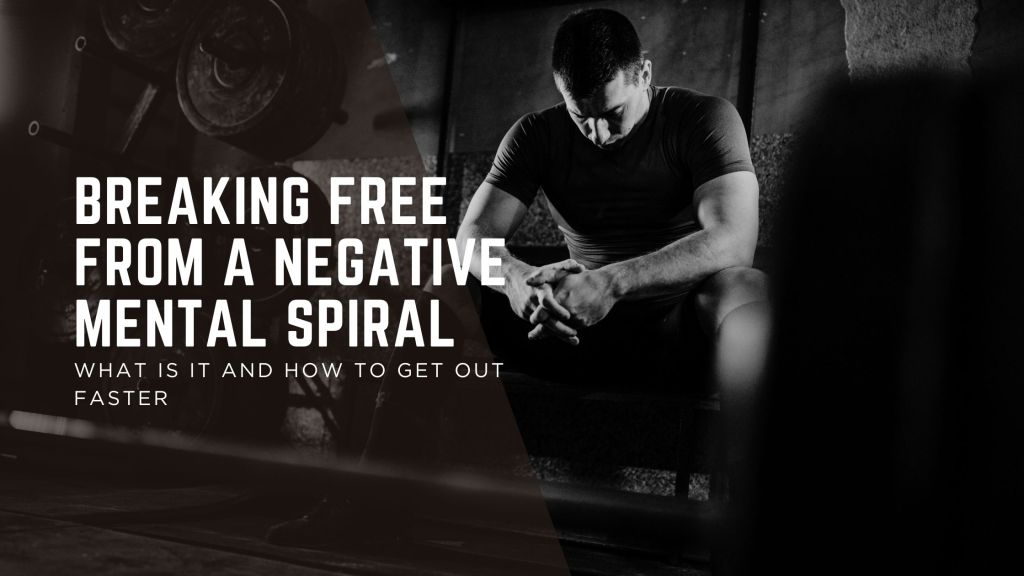
Have you ever caught yourself overthinking negative thoughts, especially after something tough happened in your life? Maybe you lost someone close to you, lost your job, or even felt stuck while watching your friends and family move forward. And no matter what you did, you couldn’t stop your mind from spiraling.
This is more common than you think—especially if you were on the “front lines” during the COVID lockdowns and restrictions.
I’ve felt this too. Even with all the positive videos I watched and the prayers I said, my mind kept racing with “what ifs” about my life and my family. And even now, five years later, I still have days where my mind just won’t stop.
Thankfully, I’m better at spinning out of the spiral faster than before. I hope this article helps you do the same.
1. Understanding Negative Mental Spirals
When we talk about “spiraling,” we mean getting stuck in a loop of negative thoughts that feel bigger and scarier over time. It’s like thinking of the worst-case scenario—and then making it worse.
Here are a few common causes:
- Stressful life events (like job loss or relationship troubles)
- Comparing yourself to others on social media
- Feeling overwhelmed with work or responsibilities
These spirals can take a toll on your mental health. Your brain starts reacting to things that haven’t even happened. If we don’t catch it early, it can become a nasty cycle that’s hard to break.
2. Recognizing the Signs
Some signs that you’re spiraling might include:
- Trouble focusing
- Feeling restless or anxious (like headaches, sweating, or a racing heart)
- Feeling overwhelmed or irritable
- Not being able to stop thinking about something
3. Strategies to Break the Cycle
When you notice your mind starting to spiral, here are a few tools that help me:
Mindfulness
Deep, steady breathing works wonders. I’ve used box breathing—breathe in for 4, hold for 4, out for 4, hold for 4—and I can actually feel my heart rate slow down after a few rounds. It’s especially helpful at the start of a spiral.
Zooming Out
Try to step back and see things from a wider view. Sometimes, I talk to myself like I’m a friend: “Neil, settle down, man.” You can also ask, “Will this still matter in a month? A year? Five years?”
Physical Activity
When I’m not feeling great but still able to function, a workout is my go-to. Lifting weights or hitting the stationary bike helps me stop overthinking. Maybe it’s because I’m too focused on not dropping weights on my face! Plus, the feel-good hormones after a workout remind me that life is better than my mind says.
Journaling
Writing things out helps me clear my thoughts. I often ask myself, “Okay, now what are you going to do about it?” I either come up with small steps or go the Stoic route: “If I can’t control it, I’ll control my reaction.”
Social Connection
Talking to good friends, family, or a therapist is gold. You want people who listen—not those who take sides or stir things up. I like talking things out because sometimes the solution comes just from saying it out loud.
Learn a New Hobby
If you already have a hobby that brings you joy, do more of it. If not, try one. I recently “discovered” that LEGO makes Star Wars ships and BMW cars. Building them slowly gives my brain a break and some joy. They even look cool in my home office.
Count Your Blessings
Every morning and evening, I try to name three things I’m thankful for. It can be simple: I got to eat, I saw a cool dog, I did 7 chin-ups. Gratitude resets your mindset and helps you see the good.
4. Building Resilience for the Future
Knowing that you’re spiraling—and knowing how to stop it—is a huge win. Now let’s build the strength to stop it even faster next time.
Healthy Habits
Sleep is your superpower. Men need 7–8 hours a night—make it a top priority. Eat whole foods, cut back on caffeine and alcohol, stick to an exercise routine, and spend time in prayer or meditation. A strong body helps build a strong mind.
Set Boundaries
Limit your time with negative people, news, or social media. Your peace matters.
Seek Professional Help
If you’ve tried everything—journaling, podcasts, YouTube, breathing exercises—and you’re still stuck, reach out to a therapist. Whether online or in person, they’re trained to help you heal and grow.
Final Thoughts
You are responsible for becoming the best version of yourself. Recognizing that you’re in a spiral – and choosing to do something about it – is proof that you love your future self enough to make a change.
Give yourself grace. This doesn’t fix itself overnight. But with time, practice, and patience…
Keep going, bro.
Resources
https://www.calm.com/blog/how-to-stop-spiraling
https://magazine.columbia.edu/article/best-way-stop-negative-thought-spiral
Reframing unhelpful thoughts – Every Mind Matters – NHS
https://www.betterup.com/blog/how-to-stop-yourself-from-spiraling
https://equinoxtherapeutic.com/4-simple-techniques-to-break-the-cycle-of-negative-thinking/

Leave a comment