
“Hang in there.”
We’ve all heard it. And if you’ve ever been in the middle of real pain when someone said it, you know how hollow it lands.
The Problem With the Phrase
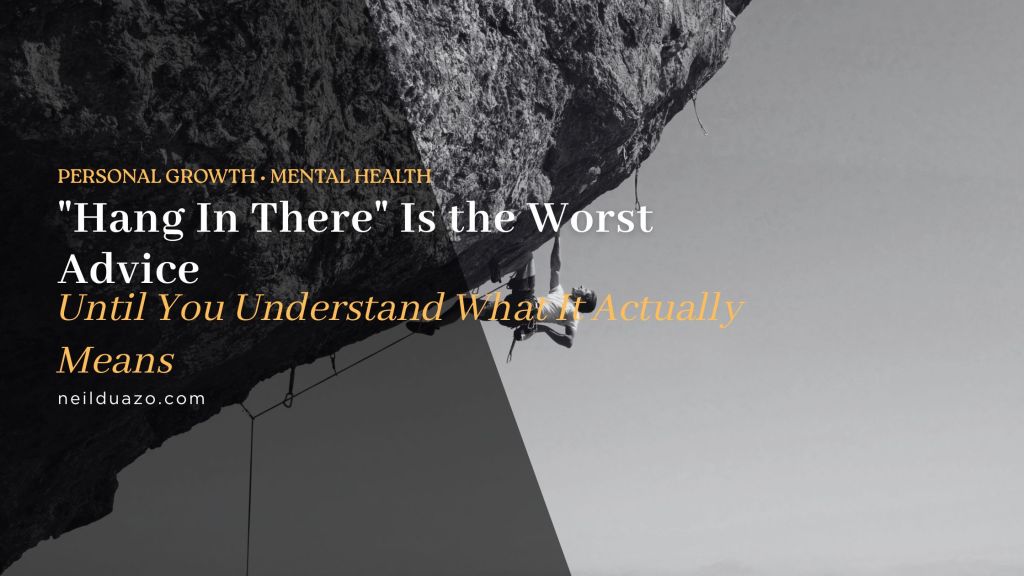
Picture this: you’re hanging off the edge of a cliff, arms burning, fingers slipping — genuinely fighting for your life. Someone walks by, glances over, and says “hang in there!” and keeps walking.
That’s what it feels like. For me anyway.
When someone is fighting a silent battle — the kind no one else can see — those three words can feel like indifference dressed up as encouragement. Everyone has their own problems. Your crisis might feel like a random Tuesday to the person saying it. But for you, in that moment, it can feel like the world is ending.
“Just keep going. It gets better eventually.”
Sure. But in the thick of it, eventually can feel like forever.
So What Do We Actually Do?
I know what that weight feels like. Bills. The cost of everything going up while your margin for error goes down. Crime, inflation, the news, the noise. It’s so easy to start spiralling — and once you’re in it, the spiral makes you dizzy.
Here’s what I’d suggest instead of spending an entire day in that spiral: give yourself a window. Five minutes. Ten. Maybe even twenty! Sit with the thoughts deliberately, and then — and this part matters — write them down. Pen on paper. Not typed. Written.
Use a simple structure to get started:
- What am I feeling right now?
- Where is this actually coming from?
- What can I do about it?
- Where do I go from here?
Getting the thoughts out of your head and onto a page does something. It makes them smaller, somehow. More manageable. Less like a fog you’re lost in and more like a list you can actually work through.
Audit Your Life Like a Business
A business that’s struggling doesn’t just feel bad about it — it audits. It looks at what’s coming in, what’s going out, and where things are leaking. We should do the same with our own lives.
Honest questions worth sitting with:
- Who am I spending my time with — and how do I feel after?
- What media am I consuming, and how much of it is fear, outrage, or politics?
- What music am I listening to?
- What does my environment look like?
- What am I eating, and how am I sleeping?
- Am I drinking enough water?
- How much time am I spending outside in nature?
You don’t need to overhaul everything at once. Answering even a few of these honestly will point you toward something worth changing. But the key word is honestly. You have to be willing to look at what you find.
The Small Things That Shift Everything
It genuinely does get better. Not always dramatically, not always quickly — but it does.
One thing that slowly adjusted my own perspective: writing down three things I was grateful for at the end of every day. Not big things. Anything. And here’s what surprised me — even the things that had angered me or hurt me made the list eventually, because without those challenges I’d never have had the chance to learn and grow from them.
The hard stuff is part of it too.
What “Hang In There” Is Really Saying
That phrase we dismissed at the start? Maybe it’s not useless after all.
Strip away the hollow delivery, and what it’s actually asking of you is this: be patient with yourself. Be a little kinder to yourself. Keep going.
There are tools out there — journaling, therapy, community, movement, rest, reflection. You don’t have to figure out which ones on your own. You just have to start asking: how can I help myself through this?
So hang in there. You’ve got this. Keep going, bro.

Leave a comment